
Recent additives
-

E380 – Triammonium citrate
E380 triammonium citrate is an acidity regulator used in some processed foods and drinks. Current evidence is broadly reassuring, but direct studies are limited.
-
E127 – Erythrosine
E127 erythrosine is a synthetic red food colour still allowed only for limited cherry uses in the EU, while the FDA revoked Red 3 for food in 2025.
-
E120 – Carmine
E120 carmine is a natural red colour from cochineal insects. Most toxicology data are reassuring, but documented allergy and rare anaphylaxis keep its safety grade at ORANGE – SOME CONCERNS.
-
E924 – Potassium bromate
E924 potassium bromate is a flour treatment agent once used to strengthen dough. It is not approved in the EU and major cancer and genotoxicity concerns support a RED safety rating.
-
E100 – Curcumin
E100 curcumin is a turmeric-based yellow food colour used in sauces and snacks, and it is generally rated GREEN – SAFE at normal food-use levels.
-
E385 – Calcium disodium EDTA
E385 calcium disodium EDTA helps keep colour and flavour stable, but older safety data and newer EDTA gut concerns support an ORANGE – SOME CONCERNS grade.
-
E282 – Calcium propionate
E282 (calcium propionate) is a common bread preservative that helps stop mould, but newer human and cohort evidence supports an ORANGE – SOME CONCERNS rating rather than a fully reassuring green grade.



Browse by category

Colours
Colours are additives used to restore, enhance, or standardise the appearance of food and drinks.

Preservatives
Preservatives help slow spoilage by inhibiting the growth of microorganisms and extending shelf life.

Antioxidants and acidity regulators
These additives help prevent oxidation, maintain freshness, and control the acidity or alkalinity of food.

Thickeners, stabilisers and emulsifiers
These additives improve texture, keep ingredients evenly mixed, and help foods maintain a consistent structure.
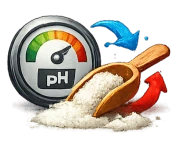
pH regulators and anti caking agents
These additives adjust acidity and help powders or granules stay free-flowing instead of clumping together.

Flavour enhancers
Flavour enhancers are used to intensify or round out existing taste without necessarily adding a distinct flavour of their own.

Antibiotics
This category includes substances historically used in limited food-related contexts to inhibit bacterial growth.

Glazing agents, gases and sweeteners
These additives provide shine, assist with packaging or processing, and add sweetness with or without sugar.

Additional additives
Additional additives include specialised substances that do not fit neatly into the main standard additive groups.
Browse by safety grade
Food additives scanner mobile application
- Designed to quickly scan product labels in any language.
- Automatic detection of additives and E-numbers.
- Instantly provide a safety analysis based on the additives detected.
- Clear results without complex chemistry.
- Science-based safety approach.