Recent additives
-

E217 – Sodium propyl p-hydroxybenzoate
E217 sodium propyl p-hydroxybenzoate, also called sodium propylparaben, is a synthetic preservative salt formerly used against moulds and yeasts. It is not authorised for food use in the EU and UK, and its safety grade…
-
E216 – Propyl p-hydroxybenzoate
E216 propyl p-hydroxybenzoate, also called propylparaben, is a preservative formerly used against moulds and yeasts. It is no longer authorised for food use in the EU and UK, and its safety grade is RED -…
-
E420 – Sorbitols
E420 sorbitols include E420(i) sorbitol and E420(ii) sorbitol syrup, sugar alcohol sweeteners and humectants with a GREEN – SAFE grade but notable laxative effects at high intake.
-
E476 – Polyglycerol polyricinoleate
E476 polyglycerol polyricinoleate, also called PGPR, is an emulsifier used mainly in chocolate, coatings, edible ices, and fatty sauces. Evidence is generally reassuring at normal intake, with high-dose liver and kidney weight changes interpreted as…
-
E1520 – Propylene glycol
E1520 propylene glycol is used mainly as a solvent, carrier and humectant in flavourings, colours and other food preparations. It is graded GREEN – SAFE at normal food-use levels, with caution for unusually high intake.
-
E227 – Calcium hydrogen sulphite
E227 calcium hydrogen sulphite is a sulphite preservative and firming agent. It is still allowed in some foods, but sulphite-sensitive people, especially some with asthma, may react to it, so it fits an ORANGE -…
-
E514 – Sodium sulphates
E514 sodium sulphates covers sodium sulfate and sodium hydrogen sulfate, acidity regulators used in some processed foods. They are generally considered safe at normal food-use levels, but high intake can loosen stools or irritate sensitive…




Browse by category

Colours
Colours are additives used to restore, enhance, or standardise the appearance of food and drinks.

Preservatives
Preservatives help slow spoilage by inhibiting the growth of microorganisms and extending shelf life.
Antioxidants and acidity regulators
These additives help prevent oxidation, maintain freshness, and control the acidity or alkalinity of food.

Thickeners, stabilisers and emulsifiers
These additives improve texture, keep ingredients evenly mixed, and help foods maintain a consistent structure.
pH regulators and anti caking agents
These additives adjust acidity and help powders or granules stay free-flowing instead of clumping together.

Flavour enhancers
Flavour enhancers are used to intensify or round out existing taste without necessarily adding a distinct flavour of their own.

Antibiotics
This category includes substances historically used in limited food-related contexts to inhibit bacterial growth.

Glazing agents, gases and sweeteners
These additives provide shine, assist with packaging or processing, and add sweetness with or without sugar.

Additional additives
Additional additives include specialised substances that do not fit neatly into the main standard additive groups.
Browse by safety grade

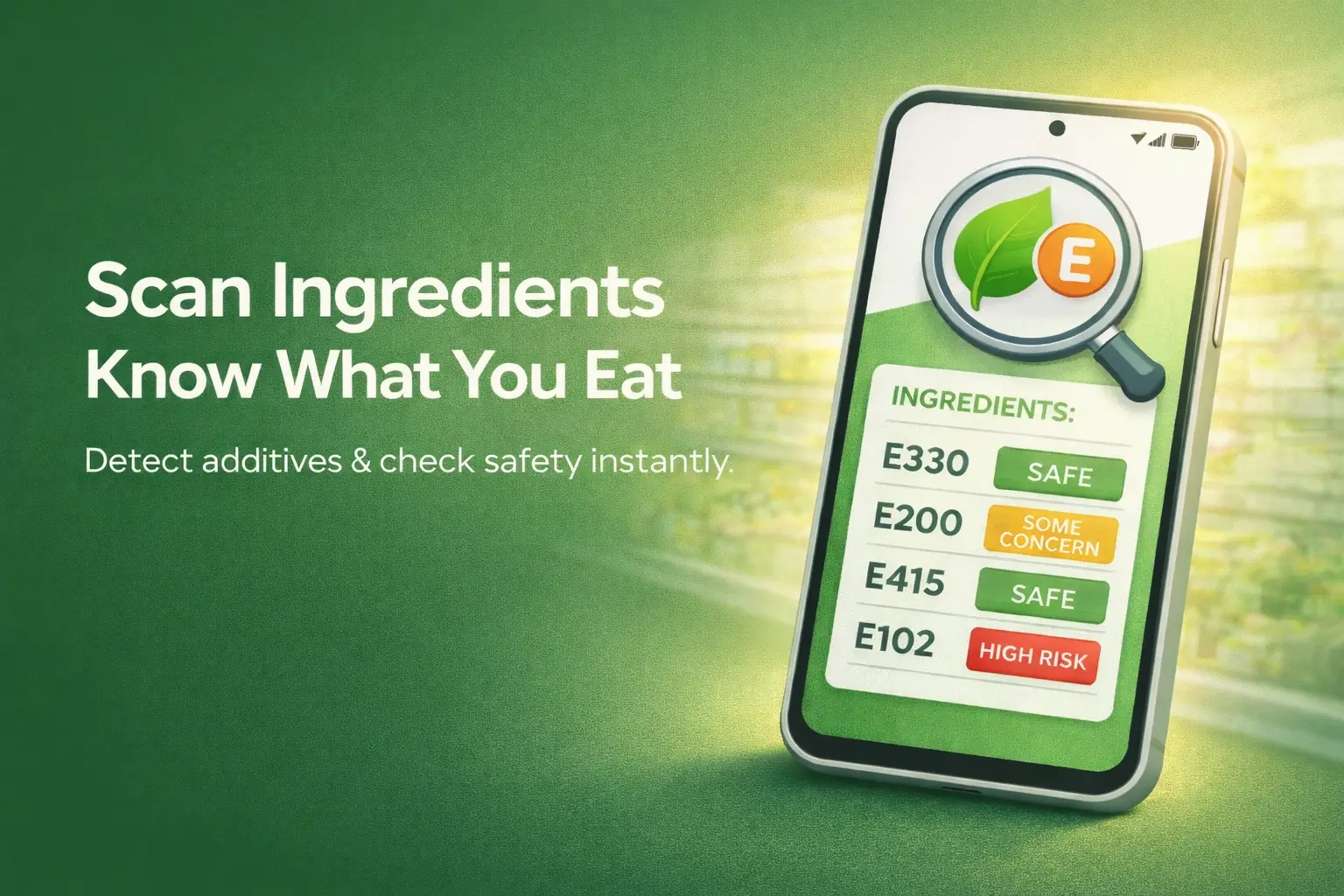
Food additives scanner mobile application
- Designed to quickly scan product labels in any language.
- Automatic detection of additives and E-numbers.
- Instantly provide a safety analysis based on the additives detected.
- Clear results without complex chemistry.
- Science-based safety approach.